International conference on minority languages and multilingualism in European schools held by the LTC Incubator PYRENLANG in Gipuzkoa
International conference on minority languages and multilingualism in European schools: practices, challenges, and future prospects
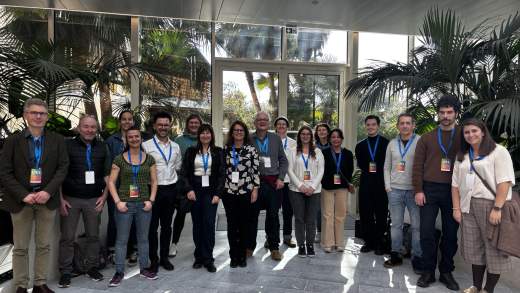
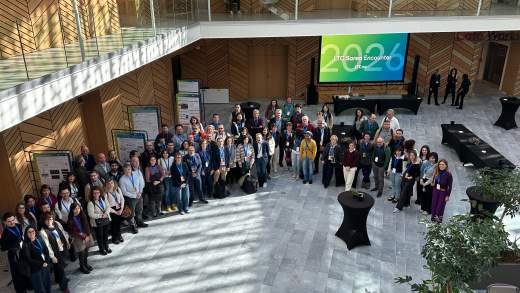
The 9th of july 2026, the University of the Basque Country, Campus of Gipuzkoa, hosted the “International conference on minority languages and multilingualism in European schools: practices, challenges, and future prospects”, organised by Elizabeth Pérez Izaguirre and Karin van der Worp from the University of the Basque Country, and Marie-Anne Châteaureynaud from the University of Bordeaux.
The conference was supported by the LTC Incubator framework of Euskampus, a framework that fosters international collaboration, knowledge transfer, and innovation in higher education and research. The conference was organised as part of the PYRENLANG project, studying the didactics and sociolinguistics of Basque and Occitan minority languages in schools in New Aquitaine.
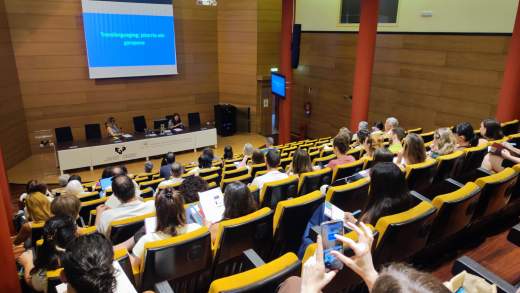
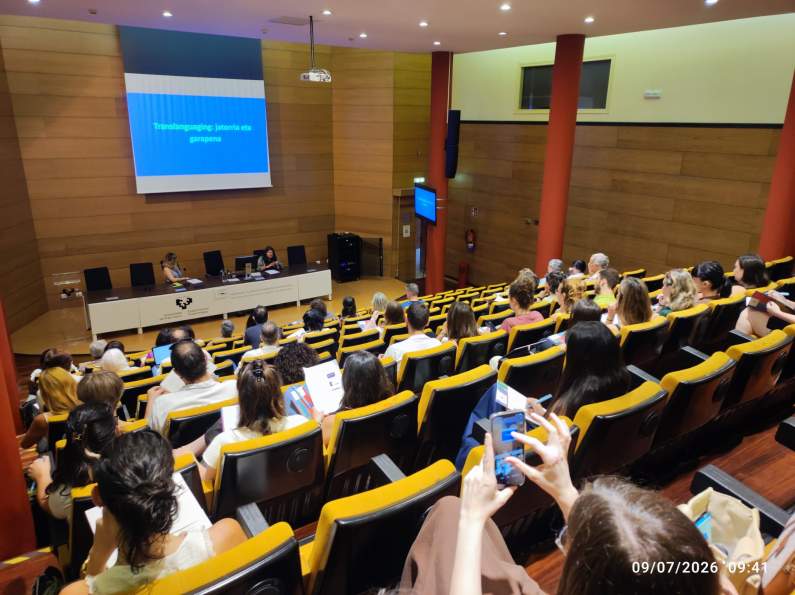
The conference was organised with the aim to analyse and gain a deeper understanding of the situation of minority languages in European schools. A total of 27 communications were presented, addressing several multilingual educational experiences in which minority languages constitute a central focus of analysis. Through the four parallel sessions participants had the opportunity to learn more about diverse multilingual educational contexts, from different viewpoints, such as didactics, sociolinguistics and educational policies. As part of the multilingual educational reality, several languages were used for presenting, including minority languages. The conference also featured keynote speakers Jasone Cenoz and Durk Gorter whose work has significantly shaped contemporary research in this area. The Plenary speech of Jasone Cenoz provided a reflection on translanguaging within the framework of minority languages while the plenary speech of Durk Gorter provided an overview of comparative research on European Minority Languages in Education.
The conference successfully provided a collaborative space for all participants, to exchange knowledge, reflect on multilingual education in Europe and strengthen networks among those committed to linguistic diversity, social inclusion, and educational equity in Europe.