AISVision
AISVision Axon Initial Segment Remodeling in Retinal Ganglion Cells: Implications for Glaucoma and Neuroregeneration
http://www.ltcsarea.eu/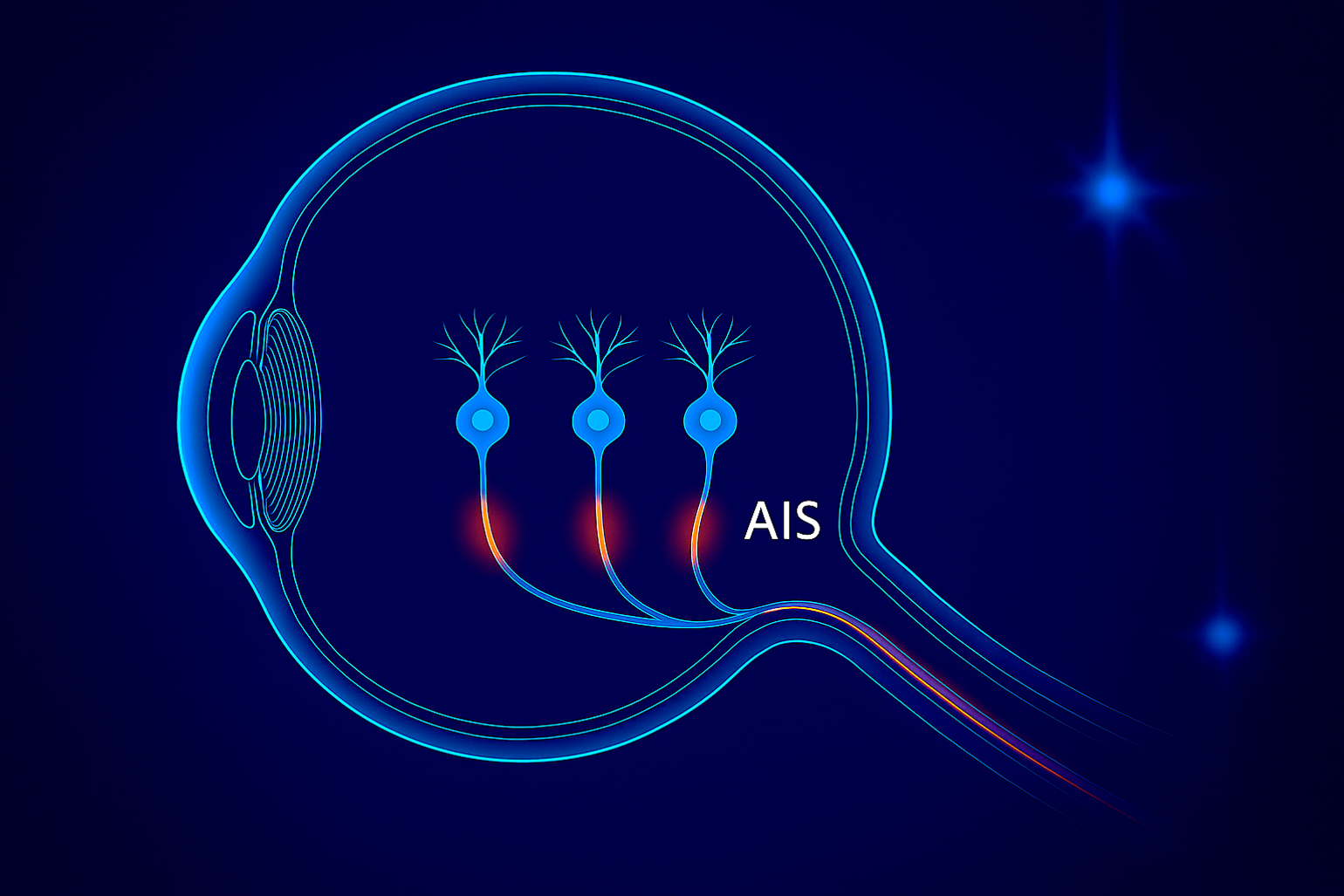
Description
Glaucoma, a leading cause of irreversible blindness worldwide, is characterized by the progressive degeneration and death of retinal ganglion cells (RGCs), the neurons that transmit visual information from the retina to the brain. The irreversible nature of RGC loss presents a major therapeutic challenge. Restoring vision in glaucoma requires strategies to protect or replace RGCs and, crucially, to ensure their proper reconnection within neural circuits.
One promising but understudied structure in this context is the axon initial segment (AIS), a specialized domain of the proximal axon responsible for initiating action potentials in central nervous system (CNS) neurons, including RGCs. The integrity of the AIS is essential for maintaining neuronal polarity, excitability, and function. Scaffold proteins, such as Ankyrin G (AnkG/ANK3), Prickle2 (PK2), TRIM46 or βIV-spectrin, are critical for organizing AIS components and have also been implicated in axonal regeneration following injury.
The motivation behind this collaborative research stems from the complementary expertise of two research groups: one specializing in retinal neurodegeneration and RGC biology and the other in neuronal polarity and AIS structure. The project is expected to generate novel anatomical and molecular data on the AIS in RGCs and how this structure is affected during neurodegeneration.
A better understanding of AIS remodeling in RGCs will clarify its role in disease progression and recovery. These findings will help define whether targeting AIS stability or regeneration could be a viable therapeutic strategy in glaucoma and potentially other neurodegenerative diseases affecting the Central Nervous System.
Coordinators
Elena Vecino
- Professor of Cell Biology
Nathalie Sans
- Research Director at INSERM
Featured News
International conference on minority languages and multilingualism in European schools held by the LTC Incubator PYRENLANG in Gipuzkoa
Read more